
This is a great talk by Will Self on a ‘practice’ or ‘discipline’ with deep roots in cannabis culture: psychogeography.
Those roots are so deep that they ultimately reach far back into the phenomenon of the band — both the hunter–gatherer band of prehistory and the more recent premodern bands of wandering qalandar dervishes and sadhus.
But in the immediate modern European context — per Self’s talk — the crucial text is Guy Debord’s The Society of the Spectacle.
For cannabis counterculture, two essential sources for Debord are De Quincey’s first (i.e., 1821) version of his Confessions and Baudelaire’s Artificial Paradises.
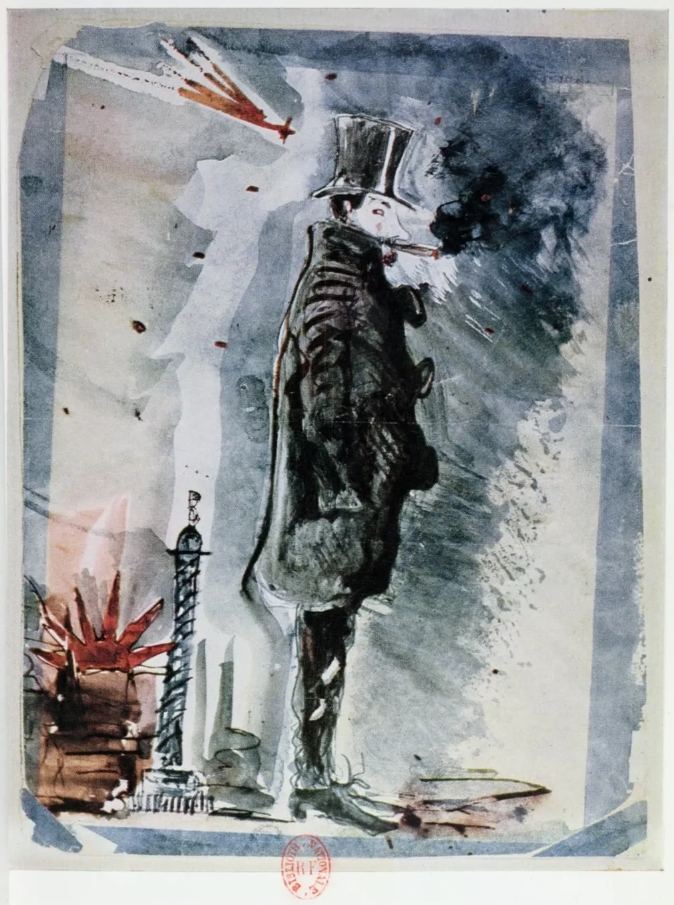
The genesis myth of psychogeography has Debord so stoned in a park one day that he can’t find his way out. Disoriented, in an instant of realization, the place and the moment reveal themselves to him afresh in all their fullness and immediacy. Pure potentiality. Ontic vitality. Cannabis kenshō!
High on kif, Debord wanders the city without plan or purpose. Through sheer aimlessness, he experiences its boulevards and alleyways as a spontaneous, coemergent liberation of person and place, city and subjectivity freed together, streets and self reclaimed. He calls this practice the dérive (‘drift’). As for the name ‘psychogeography’, he would later state this was proposed to him by a Moroccan dervish.
Dervish or no dervish, Debord’s draws upon De Quincey and Baudelaire’s literary realizations of intoxicated flânerie and – albeit for Debord the drug of choice is as often as not wine – his drunken way to ‘the drift’ follows also in Walter Benjamin’s stoned footsteps through the Paris arcades and the waterfront slums of 1920s Marseilles.
The flâneur is the ‘stroller’, ‘drifter’, or ‘loafer’ of the modern city. The name is of course French — above all, Parisian — but ultimately derives from the Normans and the Old Norse flana: ‘to wander with no purpose’.
‘The first effect of hashish is a sort of exhilaration, a singular happiness, as if all the cares of life had vanished, leaving a clear and radiant horizon’, writes Baudelaire in Artificial Paradises. ‘The external world assumes a strange splendour, and the most trivial objects become endowed with an inexplicable significance.’
So the flâneur wanders the city….
For an anarchist–mystic fusion that draws on all these ideas and works, check out Peter Lamborn Wilson’s Sacred Drift: Essays on the Margins of Islam.
Will Self’s books — Psychogeography and Psycho Too — are still in print and are illustrated by none other than Ralph Steadman.
A condensed ‘teaser’ version of the talk linked to at the top is available below:
The image at the homepage is a Bektashi calligramme — the Imam Ali with a camel carrying his coffin and his sword Zulfikar — from the wall of a nineteenth-century Turkish coffeehouse.
 The Real Seed Company: The Honest Online Source for Cannabis Landraces Est. 2007