
Here’s a really enlightening discussion between Dr. Carl Hart and an acolyte (perhaps now former acolyte) of Andrew Huberman.
If you don’t know who Huberman is then firstly, lucky you, and secondly you can – should you so wish – get a whiff of his guff and grift in this episode of the Decoding the Gurus podcast – Andrew Huberman: Forest Bathing in Negative Ions.
Hart, on the other hand, is a neuroscientist and psychologist. He grew up in the Carol City neighbourhood of Miami Gardens, an area of Miami regarded as one of the most dangerous in the U.S. He’s now the Mamie Phipps Clark Professor of Psychology (in Psychiatry) at Columbia University and the author of two vitally important books, the newest of them crucial reading for anyone involved with cannabis: Drugs Use for Grown-Ups: Chasing Liberty in the Land of Fear.
Dr. Hart’s neuroscience expertise specifically involves dopamine, including the role of dopamine depletion in Parkinsonism. At around 1 hr 9 mins into the video he responds to Huberman’s claims regarding dopamine. He doesn’t pull his punches.
But I recommend watching the video in its entirety.
‘Neurotransmitter’ discourse – ‘serotonin this’, ‘dopamine that’, etc. – and Huberman’s manosphere ‘optimiser’ drivel are dealt with summarily, in a word – “Fraud!”
The lesson is simple:
“Whenever someone tries to distil complex behaviours down to a single neurotransmitter you can stop listening.”
But ‘neurotransmitter discourse’ is symptomatic of a wider and far more serious problem of public misunderstanding of ‘drugs’ and their role in complex behaviour and social issues:
Monocausal explanations…
‘Nice drugs’ and ‘bad drugs’…
A mess you could call ‘drugs discourse’….
‘Drugs discourse’ – less a discourse, perhaps, than a set of misunderstandings that are deeply rooted in all our societies, a tangled mess that’s among the primary causes of a range of our worst global crises, not least because this basically medieval way of ‘thinking’ about the world – ‘thinking’ is putting it generously – continues to hinder long overdue reform to drug-control laws.
And in all fairness, it can said of all too many of us in the world of cannabis – and other ‘nice drugs for (mostly white) nice people’ such as MDMA, mushrooms, ayahuasca, and anything notionally spiritual, ancient, natural, or psychedelic – that we are complicit in perpetuating this ‘drugs discourse’ and the resultant hellscape….
That’s the hellscape of mass incarceration, massive flows of illicit money, corruption, civil war and state collapse in Central and Southeast Asia, racialized policing, overprescription, and the greatest and most appalling of the horrors created by the War on Drugs, one most media have been content to pass by in near total silence:
For well over half a century, thanks to the righteous Manichean quest against opiates on which America has led the world, around 80% of humanity has been denied access to medication to treat chronic and acute pain.
That 80% is the world’s poor, naturally.
In the last decade, some 92% of the global morphine supply went to just 17% of the world population: Europe, Canada, New Zealand, Australia, and the United States.
Perhaps just pause for a moment to really take in just what this very real state of affairs entails, when some 5.5 billion people lack access to proper pain relief treatment.
That figure of 5.5 billion is from back in 2015, since when the problem has only got worse and today could involve something like 6.6 billion victims….
Whatever the precise numbers, beyond them is the reality of suffering unthinkable in its scale and unfathomable in its cruelty.
We now have even a city like New York undergoing what this May 2025 study out of Mount Sinai Hospital calls A New Opioid Crisis: Pain Medication Shortages for Patients with Serious Illnesses…. and again, it’s New York’s poorest and most vulnerable who get to feel the pain.
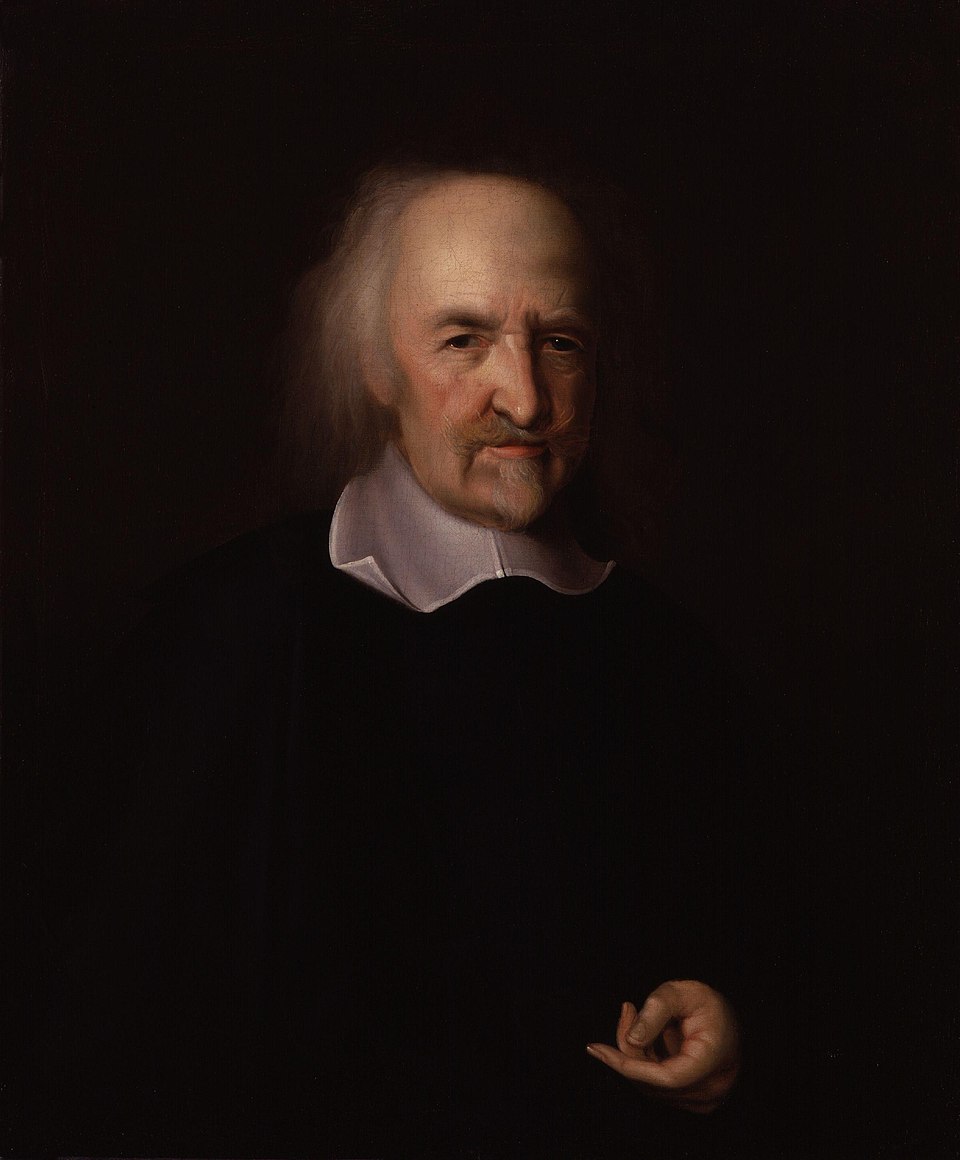
So this is where the endemic self-righteousness of the West and a Hobbesian approach to the world’s ills can wind humanity up….
…a world in which the accident of where you’re born is what decides whether you get to undergo conditions such as endometriosis or liver cancer with adequate palliative care or experience them in all their raw agony.
Now ask yourself whether perhaps in some small way you’re complicit.
***
It’s well past time for those of us who imagine we are in one way or another progressive or enlightened on the topic of ‘drugs’ to realize that a lot of this nightmare is on us.
The War on Drugs is rooted in foundational myths which most of us believe to this day, despite ample research proving they’re largely based on fictions and ignorance.
‘Opium plagues’ and the ‘Opium Wars’ ravaged China in the 1800s, we are told – a classic case of the half-truths and ‘half-court tennis’ that still skew and confuse western understanding of Asia.
Most of us will know some version of this history.
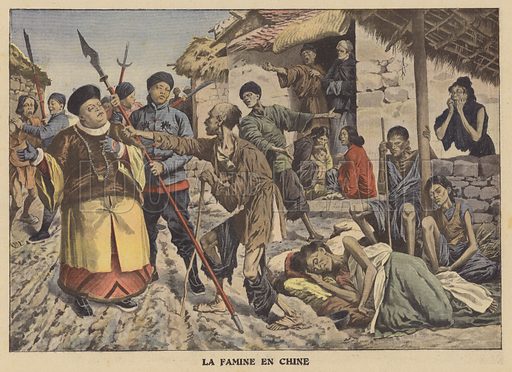
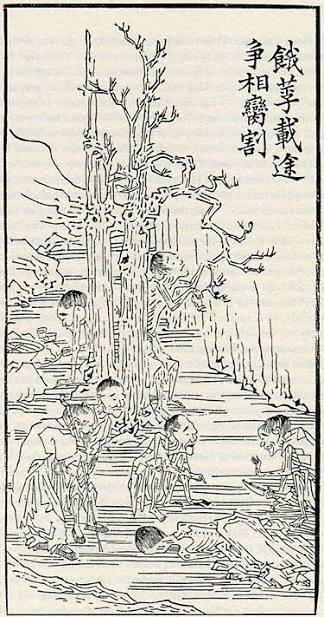
But how many of us know about the vast famines, droughts and floods, civil wars, and epidemics of cholera that laid waste to China’s towns and villages decade after decade through the 1800s, waves upon waves of catastrophes that saw millions of ‘peasants’ in the countryside starve and die, selling their children (daughters, always) for food, while the survivors filled the slums of cities like Shanghai, Taiyuan, and Canton, half-dead, traumatised, and wracked with dysentery? This devastating spectacle was beheld and utterly misunderstood by Evangelist Christians on a mission to end (not without reason) Britain’s predatory narcocolonialism, and who put two and two together and came up with a brilliant, morally righteous solution: deprive these people of the one medicine that could keep them alive. Ban opium!
…or the ‘last plague’ of Egypt and the scourge of opium and heroin that ruined the Fellahin ‘peasantry’? Nowhere to be seen in the received wisdom on this sister foundational myth of the ‘Drug War’ is there talk of the perennial irrigation systems introduced to 1800s Egypt or the sudden resulting surge in Bilharzia from around 5% to anywhere up to 60% of the population, reducing the nation’s ‘peasantry’ to crippling, chronic ill health. Again, the same inspired solution, this time championed by Egypt’s modernising urban ‘Effendi’ elites: ban opium! And ban cannabis too!
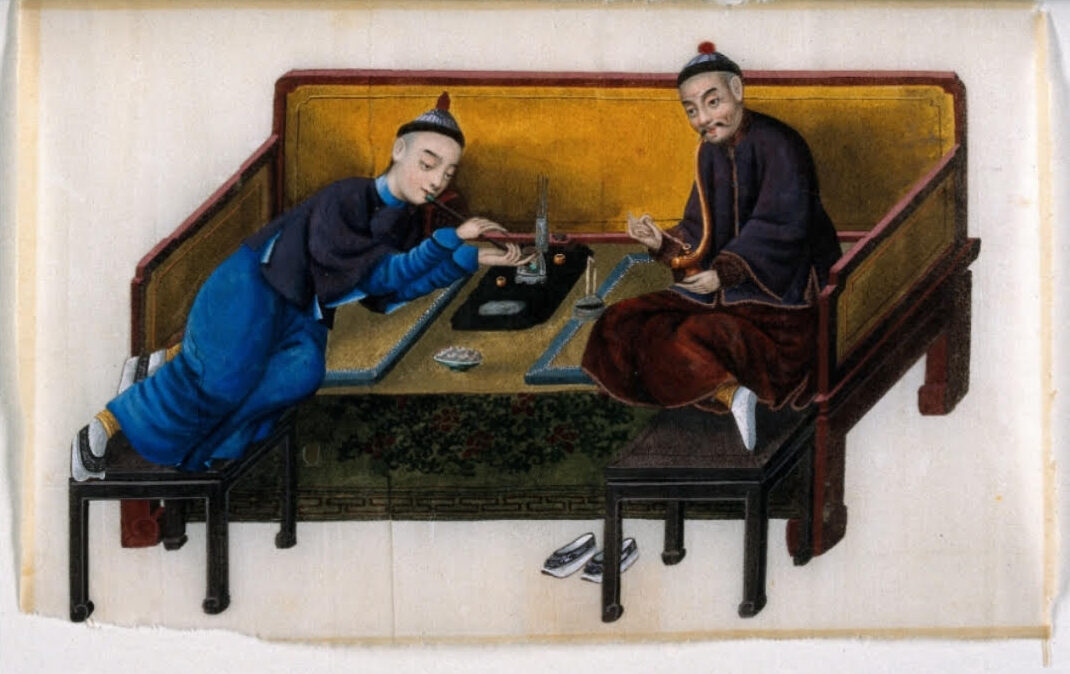
And all the while, as China and Egypt suffered from their ‘opium plagues’, the very same substance could be purchased in an array of forms anywhere in the world from Japan to India to Persia to Turkey to London or New York. High morphine Turkish or Persian opium was available in any London grocers. The variety most sought after in China and which commanded the highest prices was the milder form from Patna in East India, favoured for its gentler, serene high, more suitable for the composed etiquette of Chinese elites, and a prized item of conspicuous consumption in the opium palaces of Bangkok and Shanghai, worlds within worlds where wealthy Chinese merchants and playboys from the Thai aristocracy would enjoy fine Fujian rock oolong teas, quails’ eggs, and other delicacies as they reclined beside high-society prostitutes and ladies of the cities’ demi-monde, smoking pipe after pipe long into the night.
And as the last days of such morally dubious decadence died out, so were born the first righteous systems of international drug control, most notably in the 1920s at the League of Nations. Copy-and-pasted into the legislation of modern nation states, drug control laws pioneered in colonies such as Egypt and India brought us to where we are today, with systems of policing, ‘lunatic asylums’, surveillance, and prisons once used to discipline and punish the ‘natives’ now applied to the citizens of countries such as Britain or the United States – the dynamic of domination and oppression of ethnic outgroups and the underclass nowhere more stark than in America, where mass incarceration is a nationwide phenomenon, and in states such as Alabama, de facto slave labour is alive and well.
This is what can be so tough for the righteous crusading progressive to grasp. Just as the rhetoric of Austrian libertarian bullshit is used as a front for systematic exploitation by tech corporations, its symmetrical inverse still addles the minds of most self-described liberals and enlightened lefties on the problem of drugs: every failing, ill, or shortcoming of the state, society, and even just the basic fucked-up mess of the human condition itself are liberally externalized onto whatever happens to be the ‘evil substance’ of our time. Once it was opium, heroin, or cannabis. Next it was crack. Now it’s meth or fentanyl. Track who ends up behind bars and what it’s really all about becomes all too clear. But still, we can’t quite get our heads round it….
***
There is a diagnosis for this psycho-political pathology of progressivism. Most of us still live on a diet of scare stories, studies (and stories based on them, such as the Sackler scandal) that involve only chronically addicted people and severely truncate the vast majority of human exposure to opiates, leaving us with a public understanding of these drugs and their ‘pathology’ that’s hopelessly biased and no more objective than the average racist’s views about immigrants or Muslims.
Prolonging that diet can result in conscious or unconscious refusal to engage with objective reality (past and present). Symptoms include an incapacity to objectively assess risk and a simultaneous willingness to go along with unthinkably vast and sadistic infringements of human rights. How many books on the Sackler scandal give an account of the CDC definition of a “drug-involved overdose” and how those stats are compiled? How many mention what qualifications are required to become a coroner in US states? Do any mention how the crusade against opiates has led to withholding vital medicine from billions of the world’s poor – show a single footnote on what are, under international law, human rights abuses on a scale unequalled by any in history?
So, yes, we are still the Evangelicals taking away the opium from the skeletal ‘Chinaman’ for his own good. We are still the Effendis snatching away hashish from the Bilharzia-riddled farmer, because hashish is to blame for his condition.
Rumour has it that in severe cases of this ‘Drug War Progressivism’, individuals begin to believe that the real truth about these substances is being hidden from the public, there is a conspiracy afoot, and that electron microscopy of fentanyl, diacetylmorphine, or xylazine molecules would reveal orbiting clusters of tiny micro-witches, miniature top-hatted billionaires, little dancing black men, or even subatomic Jews….
You get the point….
***
Absolutely nobody, nonexpert or expert, denies that some people develop problematic behaviours involving drugs or that the drugs themselves have objectively different characteristics, least of all neuroscientists like Carl Hart.
Some folks reading this are likely aware that in addiction psychiatry, the DSM and IDC definitions of addiction involve the category ‘substance use disorder’. Most of us are likely to know or know of someone who’s got a weed habit that the person themselves acknowledges is problematic (i.e., ‘disordered’ and ‘distressing’) and is ‘smoking their life away’….
Check current studies on Cannabis Use Disorder (CUD) and you’ll find the claimed range for CUD among cannabis users is anywhere from 10% to as high as 30%. In itself, that range is revealingly absurd. Evidently the problem of CUD does not reside within cannabis. But the crucial point to grasp is that seeking to reduce the behaviours involved in someone whose cannabis use is out of hand down to a single neurotransmitter or to genetics or to brain chemistry or to an inherent property of cannabis itself serves only to narrow the focus away from whatever are the social and psychological problems that really need fixing – and can and should be fixed.
A medieval cast of mind still afflicts even intelligent people who are involved in this debate. They realize the urgent need to reform drugs laws, yet to varying degrees they’re still trapped in a ‘War on Drugs’ confusion that conveniently allows for any and every failing of government, society, ethics, housing, healthcare, education, or parenting to be projected onto ‘drugs’. Try drawing a simple, rational, and objective comparison between the risk and deaths involved in opiates and those involved in driving a car, skiing holidays, or plain-old household furniture and you’ll find it’s just too much for some folks – still….
Somehow or other drugs – some drugs; one decade this drug, the next decade another – belong in a class apart, the perfect scapegoat, the category of the intrinsically and irredeemably ‘Other’.
Sadly, what that means is these well-intentioned people are unwittingly in the service of the real criminals – the profiteers and sadists, whether the prison industry, militarized police, racist politicians, pharmaceutical corporations (including those looking to cash in on ‘nice drugs’ like MDMA or psilocybin), and last but not least the addiction industry – piling in on their bullshit a move in which all too many addicts (‘sinners’ become ‘saints’) are all too venally willing to comply, as are far too many of us in the world of cannabis, who can and should know better.
Until we change our tune, us ‘nice people’ with our ‘natural herbs’ and ‘spiritual psychedelics’ will remain complicit in driving the machinery of othering and scapegoating that powers the Drug War – with its ‘junkies’, ‘crack whores’, and ‘meth heads’. The bitter irony isn’t just that the fixation on chronic addiction and danger has ended half a century in which fentanyl was only ever used in hospitals, safely, and is now unleashed in uncontrolled quantities upon an unwitting public. It’s that by insisting on our difference and our purity, we’ve also done our bit to shape the conditions in which dangerous or lethal doses of not just fentanyl but nitazenes increasingly contaminate pressed pills sold as benzos and ecstasy or powders sold as ketamine, cocaine, and MDMA.
Well done, folks…
In our worthiness, we’ve teamed up with the cops, prison wardens, press, and politicians to build a world that has never been so dangerous for users of drugs – not only for out-groups who use ‘bad drugs’ like opiates, but also for us with our ‘nice drugs’….
Forgive me, ‘natural herbs’…
***
Finally – if you are going to take the high risk of buying pills and powders in a country likely the UK – always get everything tested, which can be done by simply mailing the bags they were bought in to WEDINOS…
 The Real Seed Company: The Honest Online Source for Cannabis Landraces Est. 2007
Pingback: Thomas Szasz: The Right to Take Drugs | The Real Seed Company: The Honest Online Source for Cannabis Landraces Est. 2007·
Pingback: CANNAMANtv Podcast #84 – Angus from The Real Seed Company | The Real Seed Company: The Honest Online Source for Cannabis Landraces Est. 2007·